Trevor Hogg profiles the career of director Michael Mann in the first of a two-part feature…
For a city that gave birth to the legend of Al Capone, it is not surprising to discover that Chicago is the hometown of a movie director who is known for his visceral depictions of criminals and law enforcement officers – Michael Mann.
While studying English at the University of Wisconsin-Madison, Mann experienced an epiphany upon seeing Stanley Kubrick’s nuclear war satire Dr. Strangelove. In a recent L.A. Times interview Mann stated: “It said to my whole generation of filmmakers that you could make an individual statement of integrity and have that film be successfully seen by a mass audience all at the same time.”
Traveling across the Atlantic Ocean, the university graduate spent the late 1960s in England where he attended the London Film School. Afterwards, like his British contemporaries Ridley Scott, Alan Parker and Adrian Lyne, the young American developed his visual sensibilities by filming commercials.
Inspired by documentary footage that he shot of a 1968 Paris student revolt, Michael Mann directed and produced the 1970 Cannes Jury Prize short film winner Juanpuri. A year later he was back in the United States where he filmed a road trip documentary entitled 17 Days Down The Line. Moving to Los Angeles, the budding filmmaker was mentored in the craft of television writing by Hawaii Five-O veteran Robert Lewin; he went on to script the first four episodes of Starsky and Hutch as well as the pilot episode of Vega$ which starred the late Robert Urich as a Las Vegas private eye.
A growing reputation, aided by his work on the T.V. series Police Story, resulted in Michael Mann’s Emmy-winning directorial debut The Jericho Mile. Shot on location at the notoriously violent Folsom Prison, the 1979 television movie tells the story of an inmate played by Peter Strauss who aspires to become an Olympic runner.
Leaving behind the prison walls but not the criminal element, 1981 saw the release of Mann’s first feature film Thief. James Caan portrays a professional safecracker whose plan for going straight spirals out-of-control when he becomes indebted to a crime boss. Even at this early stage of his directorial career, Michael Mann was honing his trademark style as the movie features slick camera movements, a moody musical score, and the employment of an actual burglar as a technical consultant.
In 1983, Mann briefly left the crime genre for the supernatural WWII thriller The Keep. In the film a detachment of the German army is sent to guard a mysterious and strategically important Romanian citadel. When they start turning up dead, the S.S. is sent in to investigate. Even with the international cast of Ian McKellen, Scott Glenn, and Gabriel Byrne, the movie garnered hardly any box office attention.
A return to television was called for and it happened in a big way on NBC with Miami Vice (1984-1990). Making use of a hip soundtrack, a trendsetting pastel coloured wardrobe, a gorgeous location, a hot Lamborghini, and a pair of swashbuckling undercover narcotics officers Crockett and Tubbs, Michael Mann was able to rediscover his storytelling groove. The show’s popularity completely overshadowed the more realistic and critically acclaimed sister series Crime Story (1986-1988).
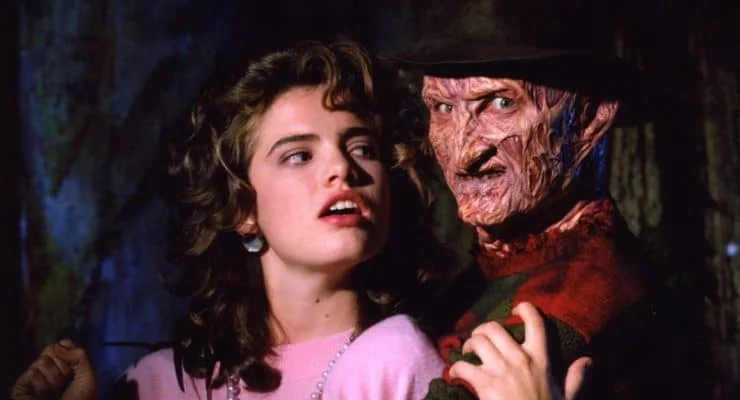
Moviegoers were introduced to the character Dr. Hannibal Lector with Brian Cox laying claim to the role in Manhunter (1986). Michael Mann’s adaptation of the Thomas Harris novel Red Dragon had the glossy look and feel of an extended episode of Miami Vice. It remains so critically divisive that almost two decades later Brett Ratner (Rush Hour) directed a remake named after the book.
Mann next headed back to the small screen to direct what was originally intended to be the pilot of a proposed T.V. series (later to be the short-lived Robbery Homicide Division in 2002). The television movie L.A. Takedown aired in 1989; it centred around a persistent Los Angeles police detective who tried to thwart an elusive crew of professional criminals. Reworked six years later, the tale formed the narrative basis of what many people considered to be the Chicago native’s cinematic masterpiece, Heat.
Read the second part of this article here.
A Michael Mann Retrospective
Trevor Hogg is a freelance video editor and writer who currently resides in Canada.
The Museum of the Moving Image also has a series of video essays on Michael Mann’s films, which you can view here.
Originally published July 14, 2009. Updated April 10, 2018.