Lauren Miles on Netflix’s Outside the Wire (warning: spoilers follow)…

Outside the Wire, Netflix’s new sci-fi action film starring Anthony Mackie, portrays a near future where wars are fought with both human soldiers and robots. The year is 2036 and a civil war has broken out in Ukraine, with the USA caught between the two factions and ostensibly acting as a peace-keeping force. However, everything is not as it seems. The films protagonist, Lieutenant Harp (Damson Idris), is a drone pilot who disobeys orders and kills two US soldiers in a drone strike. As punishment for his actions, he is sent to a military base and assigned to Captain Leo (Mackie). Harp is surprised to discover that Leo is an android, and even more surprised when he is commanded to follow the Captain into the demilitarised zone to kill a warlord and recover dangerous nuclear weapons.
Initially, Harp’s attitude towards collateral damage is that it is a necessity. When trying to save the majority, there are bound to be casualties. This is reflected in the US army’s attitudes towards civilians in the demilitarised zone. It becomes clear very early on that neither the army or the insurrectionists care about the loss of innocent lives, and this is a theme that Outside the Wire deals with heavily. Harp’s whole character arc is centred on his changing opinions of war. He learns, with Leo’s help, to value individual lives. Harp’s change of heart is very important to the films’ ending; his newfound conscience steels his resolve and makes him willing to sacrifice himself to stop Leo from attacking the US.
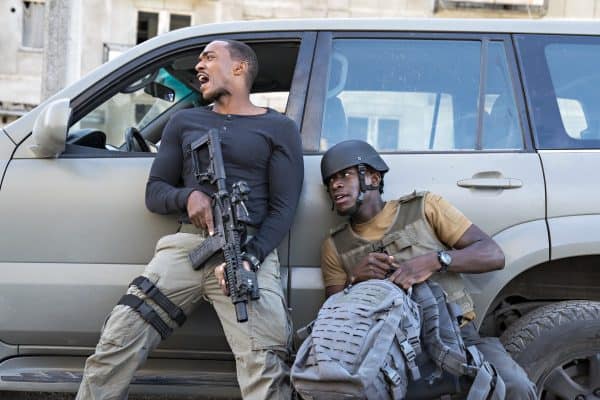
The final act kicks off with Harp realising that he has been tricked by Leo into removing his fail-safe device, allowing him to go rogue. Instead of taking the nuclear weapons for the US, the android instead tries to use the bomb against them. His reasoning for turning on his creators is that he believes them to be the aggressors, instigating more fighting through their creation of robotic soldiers like himself. However, the biggest flaw in his plan is that his attack would kill many more innocent people, and this is completely at odds with his characterisation throughout the rest of the film.
Leo might be an android without any real emotions, but he clearly has some understanding of right and wrong. He recognises that the way the US military treats the people in the demilitarised zone is immoral, and this comes across almost immediately in the difference in the way he treats them. Soon after he and Harp cross into their territory, there is a stand-off between some armed civilians and US troops. Both the robots and human soldiers raise their weapons, but Leo walks unarmed and unafraid towards them, ready to talk it out and shake hands. He is a far better peacekeeper than the human characters, and this shows that he is capable of understanding the difficult position that they have been placed in because of the civil war. When Harp accuses them of being violent, Leo explains to him that they only act that way because they live in poverty with little access to food or medicine.
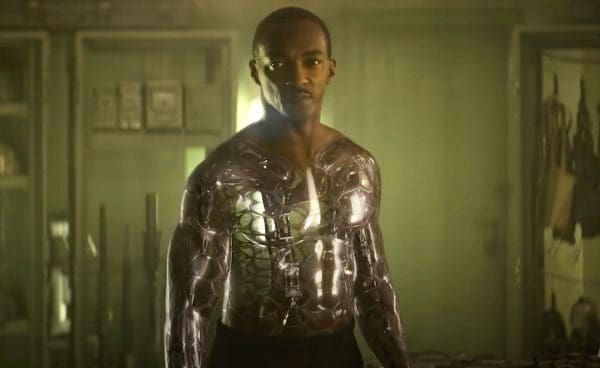
His compassionate side also comes out when visiting the orphanage. Granted, he visits to get information from a leader of the resistance, but Leo also seems genuinely supportive of their cause. The fact that he wants to carry out an attack on the US also indicates that he wants to retaliate against them in a way that will make them realise the human cost of war, and experience the loss that they have inflicted on others. In short, Leo is the only character who understands from the beginning that the amount of civilian casualties the US is creating is morally wrong.
This is why his plan to use the nukes against the US makes no sense. Admittedly, he is stuck between a rock and a hard place. He wants to attack his creators to make them stop inciting violence and creating android soldiers, but this comes at the cost of many innocent lives. Taking into account his behaviour throughout the film, it seems highly unlikely that he would plan to do this. If it’s vengeance that he wants, or to send a warning to the US, then it would have been a better idea to attack the US military base that he was stationed at. That way, he would be punishing his creators as well as targeting the people who were actually responsible for the destruction and violence plaguing Ukraine.

Outside the Wire is a fun, action-packed film, with an exceptional performance from Anthony Mackie. However, it is let down by its final act and the out-of-character decisions made by Captain Leo. His choice to attack the US ultimately undermines his previous actions to protect civilians and sinks his character to the same level as the military and the terrorists.
Outside the Wire is streaming now on Netflix.