• News
  • Reviews
  • Features
    • Articles and Long Reads
    • Interviews
    • Exclusives
  • Pop Culture
    • Movies
    • Television
    • Comic Books
    • Video Games
    • Toys & Collectibles
  • Flickering Myth Films
  • About
    • About Flickering Myth
    • Advertise on FlickeringMyth.com
    • Write for Flickering Myth

Flickering Myth

Film & TV News, Reviews and Features

  • Movies
  • News
  • Reviews
  • Long Reads
  • Trending

Oscars: What Should Have Won – Dr. Strangelove over My Fair Lady for Best Picture

February 9, 2019 by Graeme Robertson

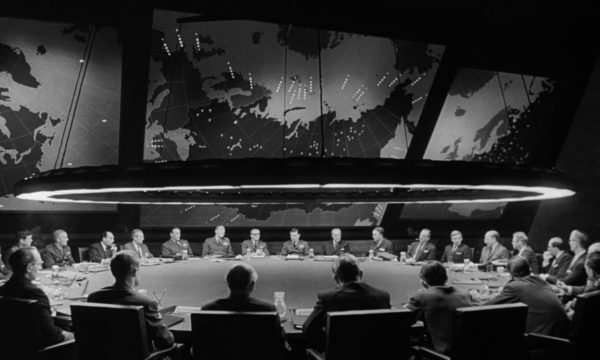
Perhaps Seller’s strongest performance of the three is that of Merkin Muffley, the increasingly exacerbated (and suggestively named) US President forced to deal with the gravest of crises. The great skill with this particular performance is that Seller’s plays it with a straight face, almost like the character been dropped in from a more dramatic film. However, it’s because Sellers plays the role straight that the character’s situation becomes all the more absurd, with the serious and straight-faced delivery often making already funny lines sound all the more hilarious such as the now iconic “gentlemen you can’t fight in here this is the War Room”.

Undoubtedly the funniest scene of the whole film is when the President attempts to talk to the (very drunk) Soviet leader on the phone to inform him of the situation. However, instead of sounding like a conversation between world leaders, it instead sounds more like a husband having a difficult talk with his spouse.

Sellers also excels in the role of RAF Captain Lionel Mandrake, a classic upper-class British officer complete with a quintessential “old bean” demeanour and manner of speech and a truly spiffing moustache to boot. While it is perhaps the most overlooked of the three performances, Mandrake works as a great reluctant straight man to the increasingly deranged antics of the American General Ripper, with the two being a bizarre heavily armed double act for much of the film.
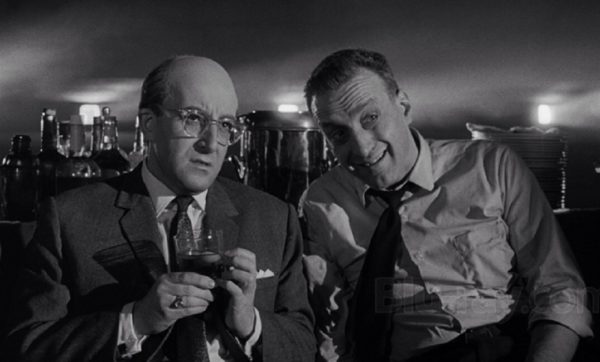
Of course, we can’t avoid talking about the title character, a bizarre cartoonish German scientist that Sellers uses to really misbehave, whether it be in battling his seemingly sentient Nazi saluting arm to the death, or accidentally letting slip with “it isn’t difficult Mein Fuhrer…..I mean Mr President”. It’s a very funny and subtly dark performance that almost steals the whole film, thus making Seller’s one of the rare actors who could steal the show from himself.

We also have to give kudos to George C. Scott for his performance as General Turgidson, a wildly over the top character who flails around the War Room like a child while worrying about the Soviet ambassador entering the War Room because he’ll “see the big board”. And that’s just when he isn’t taking hushed phone calls from his mistress when his mind should be on possible nuclear Armageddon. It’s a performance that’s made all the funnier when you discover that Kubrick tricked the actor into playing it that way, asking Scott to play the part in an over the top fashion for “practice takes” with the director then using them in the final film without letting the actor know.
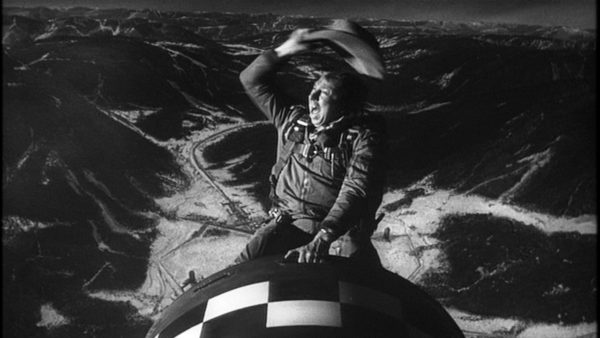
A blisteringly funny and terrifying satire on the stupidity of nuclear war and the idiots who might cause it led by a masterful triple performance from Peter Sellers demonstrating why he is so rightly celebrated, Dr Strangelove is easily the funniest film about impending nuclear apocalypse and it’s my pick as the Best Picture of 1964.

Graeme Robertson

Pages: 1 2

Filed Under: Articles, Opinions and Long Reads, Awards Season, Graeme Robertson, Movies Tagged With: Dr Strangelove: Or How I Learned to Stop Worrying and Love the Bomb, My Fair Lady

FMTV – Watch Our Latest Video Here

YOU MIGHT ALSO LIKE:

10 Essential Cult Classic 80s Movies You Need To See

10 Movie Franchises That Need To End

Eight Great Prison Movies You Might Have Missed

The 10 Best Villains in Arnold Schwarzenegger Movies

Films That DEMAND Multiple Viewings

Horror in Suburbia: Why 80s Horror Was Obsessed with Middle-Class Fear

The Most Incredibly Annoying Movie Characters

Psycho at 65: The Story Behind Alfred Hitchcock’s Masterful Horror

Back to the Future at 40: The Story Behind the Pop Culture Touchstone

Peak Paranoia: Why David Cronenberg’s 80s Body Horror Movies Are More Relevant Than Ever

FEATURED POSTS:

Blu-ray Review – The House of Hammer Vol. 1 (2026)

10 Essential Workplace Movies

The TV Shows That Dared To Be Complex Before Complexity Was Allowed

Angels, Demons and Devils with Keanu Reeves

Movie Review – I Want Your Sex (2026)

Yo Joe June G.I. Joe Classified Series reveals include Hooded Cobra Commander, Action Man, Deep Six and more

Raiders of the Lost Ark at 45: The Story Behind the Quintessential Action-Adventure Classic

Movie Review – Nesting (2025)

Masters of the Universe Isn’t the Bomb You Think It Is

Movie Review – The Death of Robin Hood (2026)

FLICKERING MYTH FILMS


YOU MIGHT ALSO LIKE:

Seven Famous Cursed Movie Productions

They Don’t Make ‘Em like Grosse Pointe Blank Anymore

8 Essential Nordic Noir Movies

13 Kick-Ass Straight-to-Video Action Movies to Watch on Tubi

  • News
  • Reviews
  • Features
    • Articles and Long Reads
    • Interviews
    • Exclusives
  • Pop Culture
    • Movies
    • Television
    • Comic Books
    • Video Games
    • Toys & Collectibles
  • Flickering Myth Films
  • About
    • About Flickering Myth
    • Advertise on FlickeringMyth.com
    • Write for Flickering Myth

© Flickering Myth Limited. All rights reserved. The reproduction, modification, distribution, or republication of the content without permission is strictly prohibited. Movie titles, images, etc. are registered trademarks / copyright their respective rights holders. Read our Terms of Use and Privacy Policy. If you can read this, you don't need glasses.


Flickering MythLogo Header Menu
  • News
  • Reviews
  • Movies
  • Features and Long Reads
  • Trending
  • Flickering Myth Films
  • About Flickering Myth
    • About Flickering Myth
    • Advertise on Flickering Myth
    • Write for Flickering Myth